Glimpse into Made To Last Forever: John Fairbanks, the First Son, and Cyrus the Fairbanks Fairbanks Patriot Project
Glimpse into Made to Last Forever
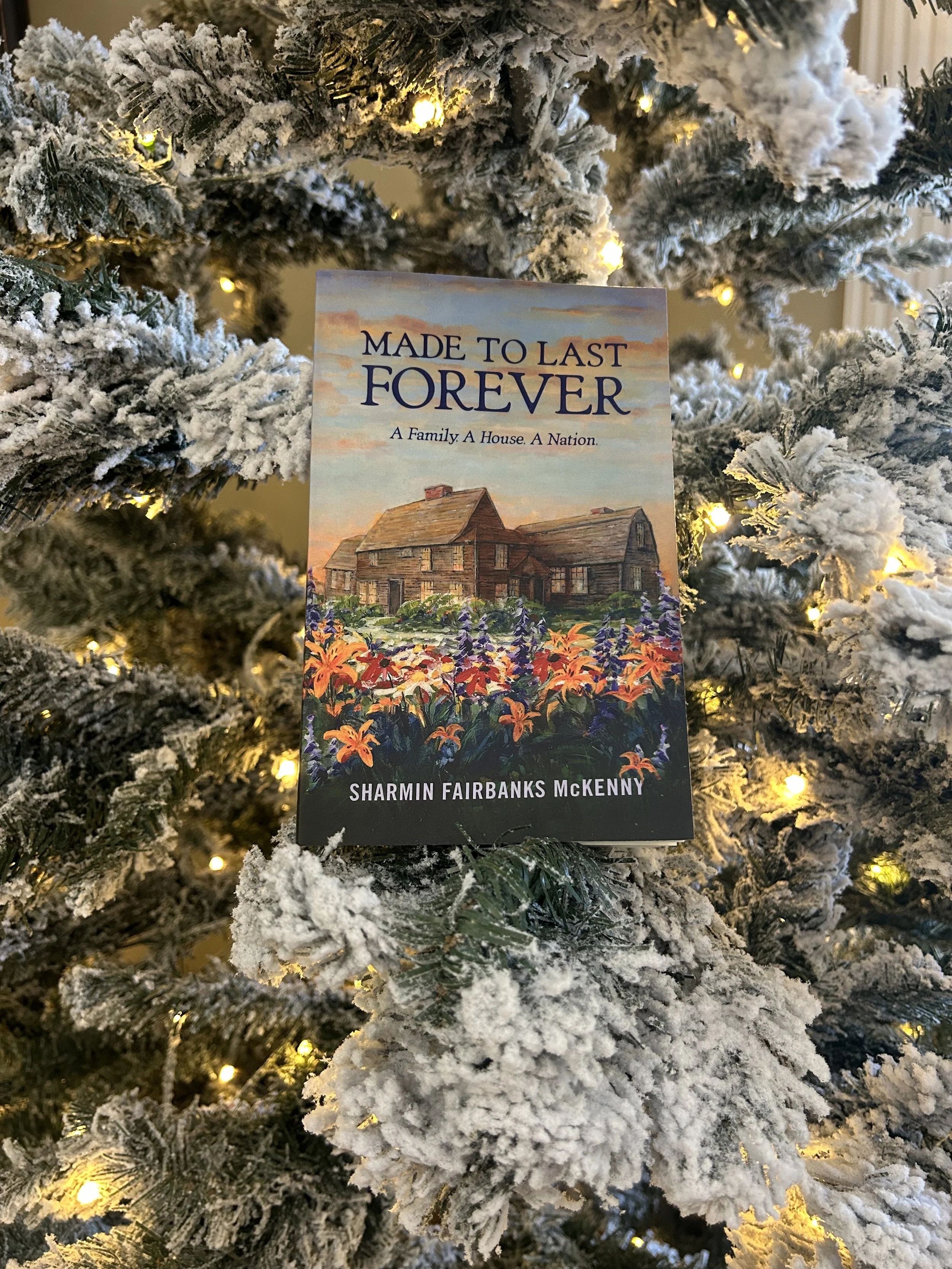
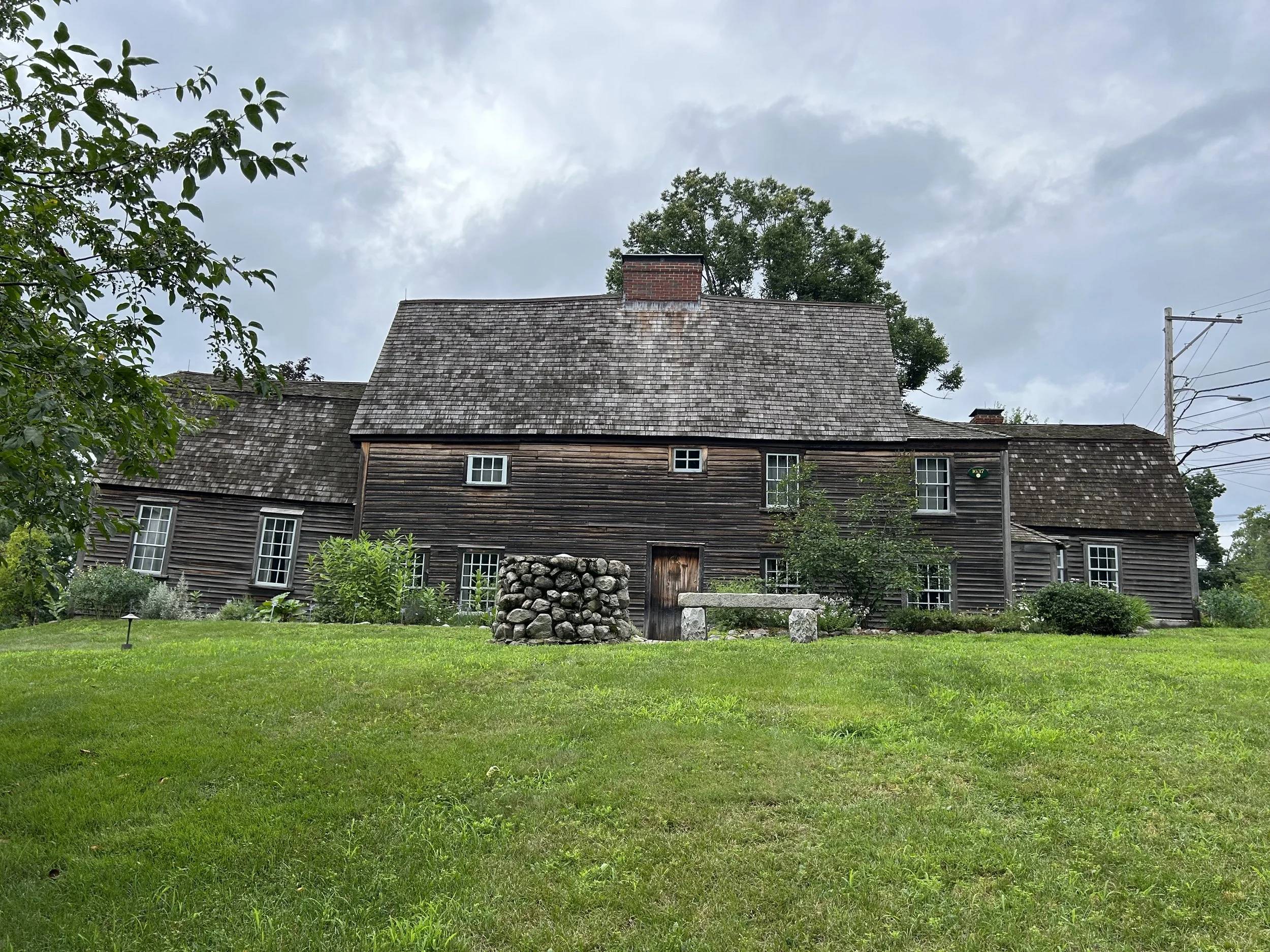
Made to Last Forever tells the story of the young family of six that left England in the early 1600s and built the oldest frame house still standing in America in 1637. You can meet the family in the book. You can find details of Jonthan and Grace in the blog archives.
To start the new year, each blog will explore details of one of Jonathan and Grace Fairbanks’s six children, indentured servant, apprentice, and small girl they took into their home who remained until she married at 17 years old. Then you will be ready to visit The Fairbanks House this summer on vacation or at the National Fairbanks Reunion on July 11, 2026. After reading the book when you step into the house that has changed little, you will feel as if you have stepped back in time to 1637. Register for the reunion or book a summer tour at Fairbankshouse.org.
Prepare for your local family reunions by sharing Made To Last Forever: A Family. A House. A Nation. and share your shared heritage or shared family experiences.
John Fairbanks (1618-1684)
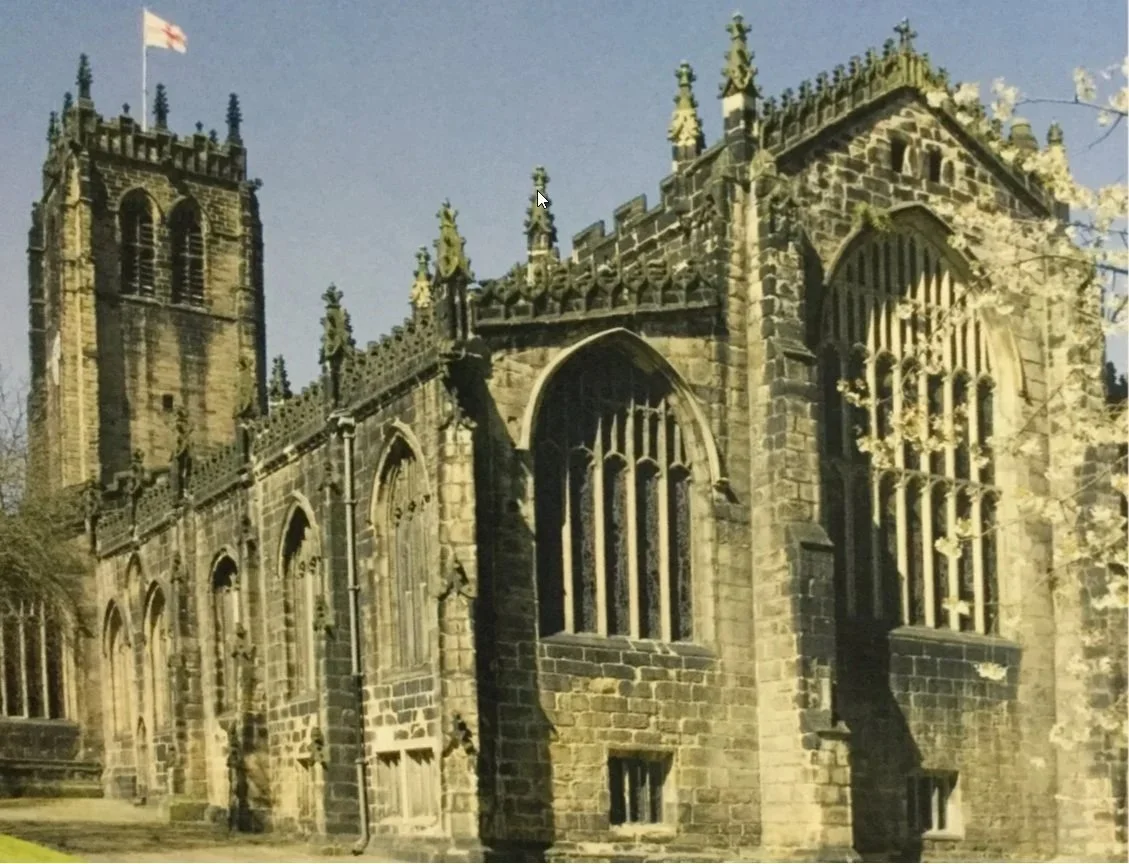
St. John the Baptist Church, Halifax, West Yorkshire, England also known as the Minster.
John Fairbanks was born in northern England in 1618 about a year after Jonathan and Grace were married. He was christened at St. John the Baptist Church in Halifax, West Yorkshire, England, where his parents were married. During his childhood the family moved several times in the Halifax Parish area. Before 1627, the family is believed to have moved to an area about 25 miles north of Sowerby. Susan, the 5th child of Jonathan and Grace, is believed to have been christened at the St. Mary the Virgin church in Thornton-in-Craven.
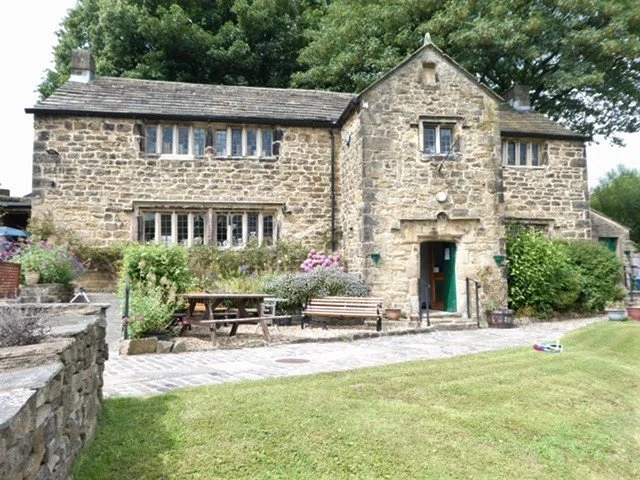
Earby School built 1594-1600
In historical literature, it is said that the sons had a good education. In 1627, John was nine years old. The family probably lived near Thornton- in-Crave approximately 25 miles northeast of Sowerby. Some of Jonathan’s extended family lived there.
A good school was in that area, in Earby. It was built between 1594 and 1600 and stands today as a gritstone two story building. The upper level was the dwelling for the schoolmaster, and the bottom level was a large classroom. The Earby school was considered to be a good school, because it taught Latin. It is possible that both John and George attended the Earby school.

Mayflower II at Plymouth, MA
John was in his mid to upper teens when the family sailed to the new Massachusetts Bay Colony (MBC). It is possible that the Fairbanks brought an indentured servant with them, Samuel Bullen. He was probably about the same age as John, perhaps a couple years older. We’ll explore Samuel and indentured servants and apprentices in a later blog.
When Jonathan, the father, became a proprietor in Dedham in late March of 1637, the men and servant must have started to clear the land he was granted immediately. The Dedham law required them to live in the village by November 1 the same year. John would have been about 19 years old and capable of much work in helping to settle the family.
In September of 1638, John Fairbanks and John Rogers, a neighbor, were asked to assist on an expedition up the Charles River. They accompanied Nathanial Woodward, a mathematician, Mr. Dalton, Will Perkins, and Mr. Dalton’s servant as they traveled the southerly parts of the Charles River to observe the southernmost land of Dedham which would abut what is now Rhode Island. They were commissioned by the Colony to determine the most navigable latitude of the Charles River, to map and to report back their findings. (DTR, Vol. III, p. 48). The ancestry of Eva Belle Kempton
On February 3, 1639, John was granted one cedar tree from the Dedham’s Common land for special services to the town (DTR, Vol. III, p. 63). This is believed to be compensation for the Charles River expedition. Common land was land that belonged to the town. No one could use or take wood from it unless sanctioned by the town.
John reached his majority in 1638. Majority or “adult age” was reached when a male was 21 years old. At that age, a man could become a proprietor of Dedham. On June 23, 1640, John Fairbanks was granted six acres of Dedham land at the east end of his father’s land. On the same day, Samuel Bullen, the indentured servant, was granted Dedham land that was relinquished by Dr. Deengain when he left Dedham. It would appear that they both had reached their majority and that Samuel had satisfied the terms of his indenture agreement. Servants were not allowed to own land. (DTR, Vol. III, p.63)
As was the custom, John must have taken a year to build a homestead before he married Sarah Fisk in March of 1641. About a year later, John didn’t feel he had enough money to provide for his new wife. He asked the selectmen, the governing body of Dedham, for the right to sell sawn wood, up to 1000 boards, to buyers in and outside of town. This request came on the heels of another proprietor’s request for the same. That man, John Roper, claimed he was destitute of corn, which often meant any kind or all grains. (DTR, Vol III, p. 83). The boards were possibly made from the Dedham Town Common Woods. Both were granted permission to use and sale the wood.
The next year, 1642, John and his father along with all proprietors were granted upland ground fit for improvement with a plough (DTR, Vol III, p. 94-96). John was granted more land than his father which is interesting. There would be more land grants in the Dedham town records which will not be covered here.
John and Sarah had nine children. Their first son was born in 1642. He died at age 19. The fourth child, a son, was born in 1648. He died at age 14. In 1650, twin girls were born. This was the year that an average of one child in every family died during an epidemic. They died at 10 and 11 months old consecutively. Lorenzo Sayles Fairbanks (LSF), Fairbanks Family in America, p. 35. In all John and Sarah had three living sons at the time of John’s death, John the second son, Joseph the 7th child, and Benjamin the 8th child.
In 1651, we find John and his youngest brother, Jonathan Jr., killing wolves for the town for 10 shillings each if taken within 3 miles of the meetinghouses of Dorchester, Roxbury, Dedham or Braintree. The wolf’s ears were nailed to the meetinghouse to assure that they weren’t used twice to garner the reward.
John, along with his father, Jonathan Sr., received 500 acres of grant land in Wollomonopoag, now known as Wrentham, in July of 1660. (DTR, Vol. IV , p. 64) The ownership of that area, like Natick, was not clear. A group of Dedham proprietors, including Jonathan and John Fairbanks, purchased that land from Sachem King Philip of the Wampanoag Tribe in 1662 (LSF, p. 35). The townsmen laid out 600 acres of Wrentham land for the new town to be clustered around two natural lakes. It was incorporated in 1673. The town was abandoned 3 years later during the King Philip’s War. No one was killed in Wrentham. Four years later, all of the town’s people returned to Wrentham. At some time, John built a house in Wrentham as is found in his 1684 will. (History of the Town of Wrentham, MA)
In the 1650s and 60s there was a prolonged court case between Dedham and Natick, a Praying Indian Town, over the ownership of the land granted by the General Court to Dedham in 1635 and 1636. The court ruled that Dedham had to cede the land to Natick. Because the ruling recognized the claims of both parties, in 1664, it was essential for Dedham to find 8000 acres of land not previously as compensation for the land Dedham ceded to Natick and for the cost of the court case.
In September, Lt. Fisher and John Fairbanks were asked by the Selectmen of Dedham to go to Lancaster and ask John Prescott and Jonas about possible land available around that area. It was found that the land in the Lancaster area had already been granted making it unavailable for Dedham (DTR, Vol. IV, Appendix p. 235). Jonas had left Dedham and settled in Lancaster in 1658 when he married Lydia Prescott.
Lt. Fisher was asked to go out to the Hadley, MA, area to see about other land that was said to be available. This land was 70 miles from Dedham. It was granted to Dedham and later called Deerfield, Massachusetts. Jonathan, the father, was granted some of the land there. None of the sons moved to Deerfield.
In 1664, John Fairbanks and three others were chosen as woodreeves. They were to observe the Common Forests for misuse, check fences and other wood structures for faulty repairs which would cause problems to the community. (DTR Vol. 4, p. 98)
Jonathan Sr., the father, died in December of 1668. His will had been written 6 months earlier. In it, he named John as executor of his estate, but requested Eleazur Lusher and Peter Woodward to oversee and assist John. Grace received all moveable possessions, but had full use of unmovable possessions such as houses, yards, and land. John shared in the use of the unmovable possessions and was granted the town rights and common land. Common land in this instance meant land such as shared town tillage land and pastureland. Money would be distributed to Grace for the rest of her life.
At the end of Grace’s life, John retained rights to all the Fairbanks land except what had already been given to George and Jonathan Jr. Jonas did not receive land in Dedham. He was in Lancaster, but he received money equivalent to what had been given to George and Jonathan.
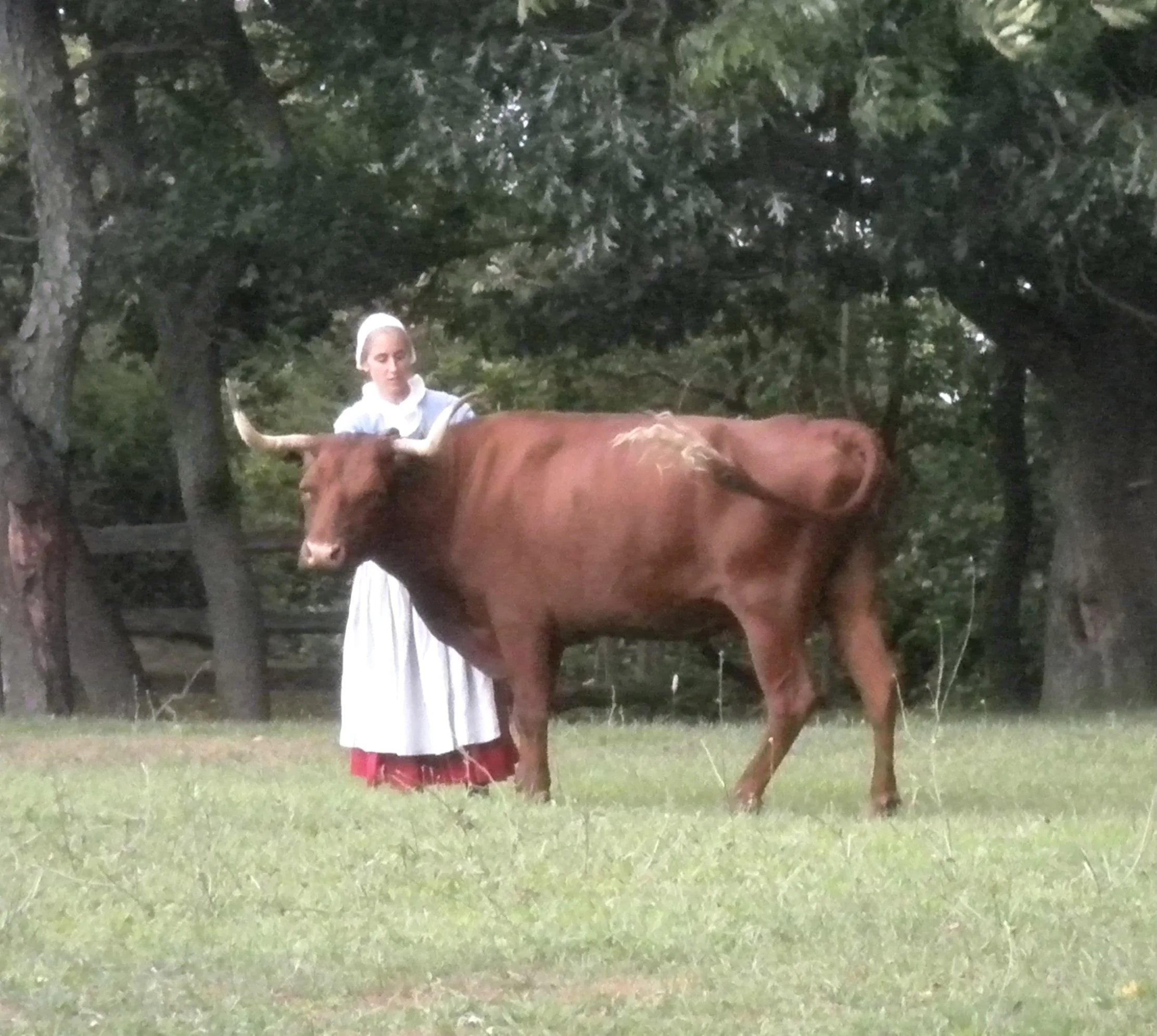
John’s daughter Sarah, also received an endowment. She was to receive “one young beast between one and two years of age.” This animal was taken from the stock which was left to Grace. An additional three pounds was to be given to Sarah when she became of lawful age. She was twenty-three years old at the time of her grandfather’s death. Note, Sarah was given the same amount as Mary, the daughter, was given for a suit of clothes. Perhaps her gifts were for the help she gave Grace with the dairy, butter and cheese processing and to assure Grace had help after Jonathan passed. For a deeper look at Jonathan’s will go to
The Will and Last Testament of Jonathan Fairbanks of Dedham, Massachusetts. Each child’s portion of the endowments will be discussed in their blog post. The will can be found at the Fairbanks House and Family Search.
A facsimile of John Fairbanks’s signature can be found in the appendix (DTR, Vol. IV, p. 271). More extensive study of John Fairbanks can be found in both Dedham Town Records Volume III and Volume IV. Consult the index for exact pages. For births and death records, consult Dedham Town Records Volume I .
For the purpose of this blog, we will not explore the 16 years John lived after the death of his father in 1668. John Fairbanks is probably best known for his care of the original house and land. After his death his descendants inhabited the 1637 Fairbanks House for eight generations until it was purchased by the Fairbanks Family of America, Inc. which is now made up by descendant of all the children of Jonathan and Grace and supportive other’s through memberships. fairbankshouse.org
In the next blog, we will explore the life of George Fairbanks, the second child and second son of Jonathan and Grace Fairbanks.
Fairbanks Revolutionary War Patriots
Cyrus Fairbanks - Drummer
Jonathan I , Jonas II, Jabez III, Joseph IV, Joseph V
It’s a misconception that the drummers for the Revolutionary War were young boys. The youngest men accepted into the armies were 16 years old. For a younger boy, marching long distances carrying a drum and producing a cadence would have been a great task. The position is also misconceived by many as a role of lesser importance. Quite the contrary, it was a role of respect. The drummer received an official uniform early in the order of rank. The drummer had a critical job of uniting the troops, regulating their daily activities, and forwarding orders from the leaders to the fighting men. Drums could be heard over long distances and over many troops. The drummers were also responsible for administering whippings as punishment when necessary.
Cyrus, one of several Fairbanks drummers in the Revolutioanry War, is listed as #161 on page 201 in the Lorenzo Sayles Fairbanks book, The Fairbanks Family in America: 1633-1897. In the DAR records, he is given #A038367.
Cyrus was born in Harvard, a spin off town of Lancaster, MA. on May 17, 1752. At 23 years of age, he became the drummer for the Minutemen in Captain Jonathan Davis’s Company and Colonel John Whitcomb’s Regiment. They marched on the Lexington Alarm on April 19, 1775. However, many of the regiments from the Lancaster area didn’t make it to Lexington, MA in time for the Lexington or Concord battles. It is over 30 miles and would have taken more than 12 hours to get there by foot.

Drum could be heard long distance.
Cyrus, as many others, stayed in the coastal area and assisted with the Siege of Boston. He remained a drummer under Captain Jonathan Davis in Col. Asa Whitcom’s Regiment for 8 months and was quartered in Cambridge. Later, he was at Prospect Hill where George Washington held his defensive command post during the Siege of Boston.
In 1776, Cyrus was a Drum Major in the army near the Hudson. He marched, drumming the cadence for the troops, until they reached Dobbs Ferry in New York. He remained there until his enlistment expired in September of 1776.
In October of 1777, as Burgoyne advanced, Cyrus again enlisted at Harvard, Mass. for one month. He marched to Petersham, MA, where his company of militia men were organized. He received the rank of corporal in the company of Captain Samuel Hill and Colonel Josiah Whitney. That company marched to Fort Edward in New York.
After the war, in 1779, he married Mercy Hale of Stow, MA. They had 7 children.
Cyrus died in Ashburnham, MA, June 18, 1752 at age 100 years, 1 month, 1 day.
Cyrus and the drummers during the Revolutionary War were of major importance. They were the alarm clock, the dinner bell, the voice of the superiors, and the cohesion for the men they called friends and family who fought beside them. Like other Fairbankses who fought with their words in the Third Massachusetts Provincial Congress, Cyrus fought with voice of his drum.
Summary
Each of Jonathan and Grace’s children contributed to the family in a memorable way. John lived his own life, but perhaps he and his descendants are remembered most as the residents of the original Fairbanks House that still stands today as the oldest frame house in America.
Each Revolutionary War Soldier’s efforts were important in moving this nation to independence. A weapon was not always necessary to make a big contribution as we learned through Cyrus and his drum.