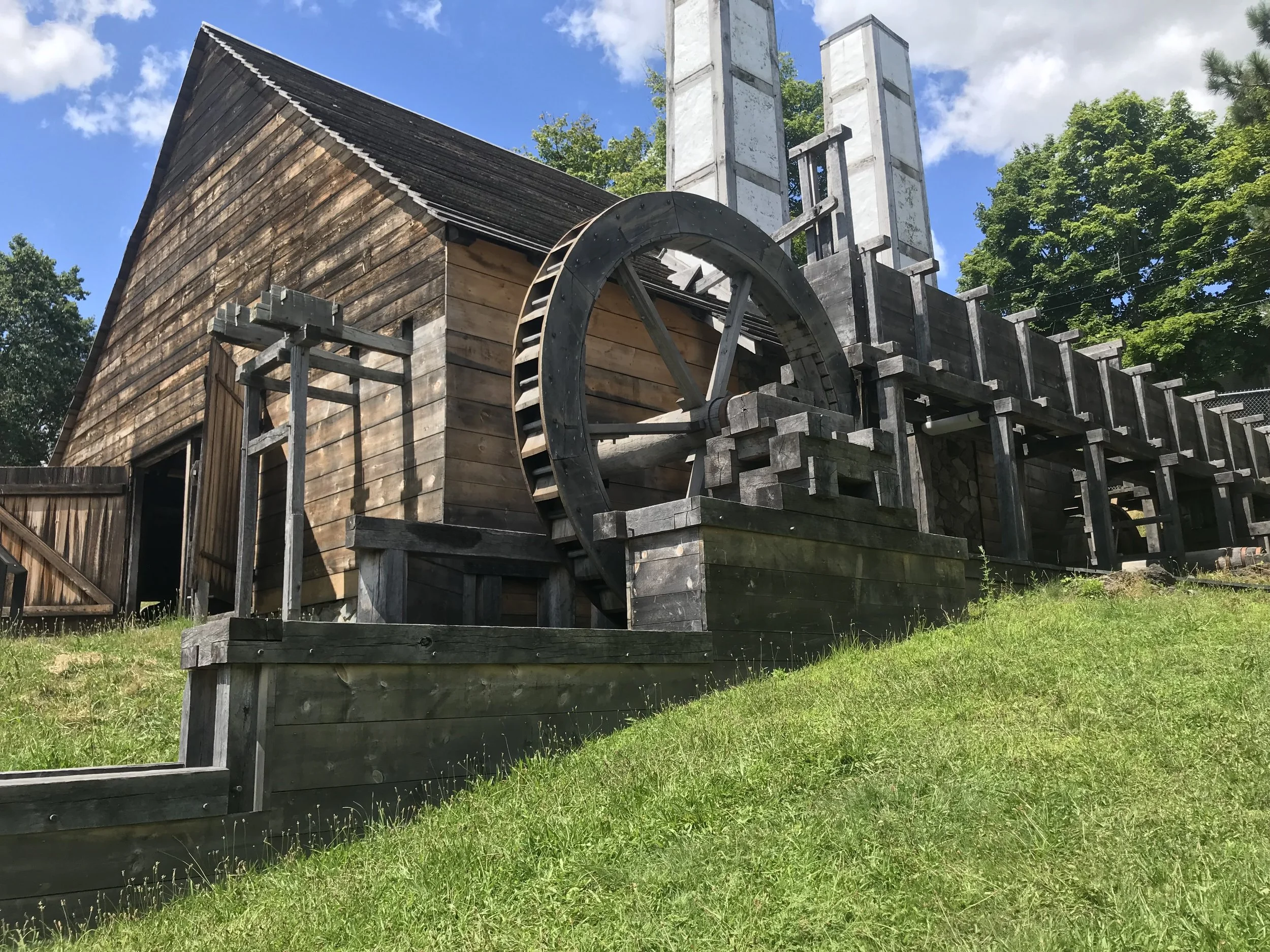
Glimpse into Made to Last Forever: Glimpse into Made to Last Forever: Jonas Fairbanks (1625-1676) and the Colonial Ironworks
The “Glimpse into Made to Last Forever” has been combined with the blog about Jonas Fairbanks, fourth child and third son of Jonathan and Grace, since they are so closely related. I refer you to earlier blogs about Hammersmith (Saugus Ironworks) for more details about what Jonas may have experienced when he worked there. Spoiler Alert: this blog has information that may affect your reading experience of Made to Last Forever. There is so much information in this blog that the Fairbanks Patriot portion of this blog will be deferred until next month.
Jonas Fairbanks (March 6, 1624/25-February 8, 1675/76)
Jonas Fairbanks is this blog’s featured child. Jonas was the fourth child and third son of Jonathan and Grace Fairbanks. Like the other children, Jonas was christened at St. John the Baptist Church in Halifax, West Yorkshire, England in February of 1624/25. That area is in the northern part of England. The family had returned from Shelf, England, a short distance away, to Sowerby at the time of Jonas’s birth.
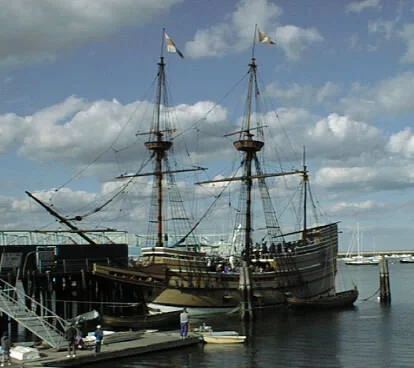
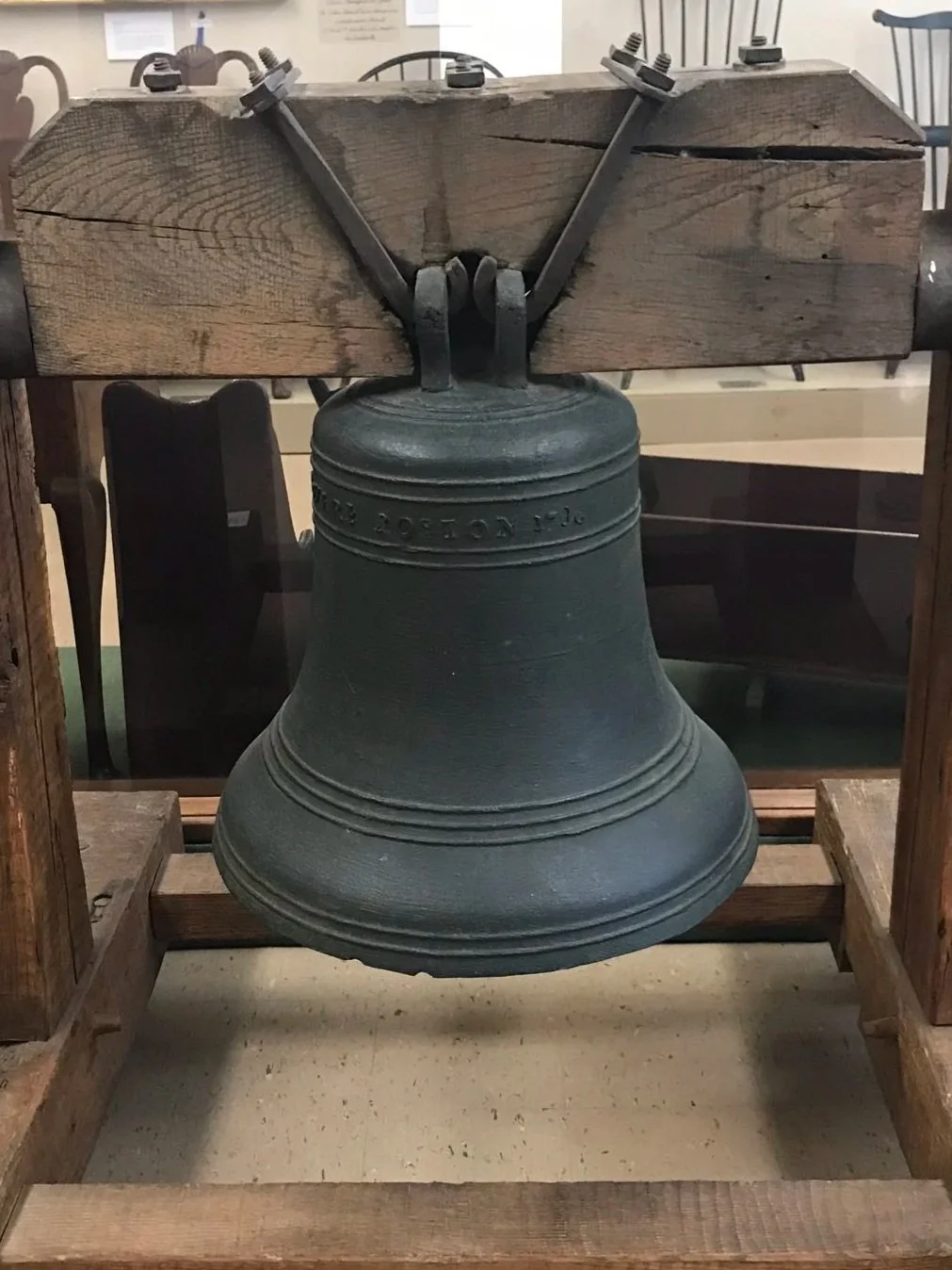
Mayflower II docked at Plymouth is simiar to the ships of 1600s
Sometime after his birth, the family moved further northwest near Thornton-in-Craven, England. There is some evidence that Jonas’s younger sister, Susan, was christened there at the St. Mary the Virgin Church in Thornton-in-Craven in late 1627. Jonas would not have been old enough to go to the Earby School in that area which his older brothers, John and George, may have attended.
Jonas would have been eight to eleven years old when the family took the long ocean voyage to the Massachusetts Bay Colony (MBC). We have no documentation of that voyage.
Probably sometime during Jonas’s teen years, Robert Crossman came to Dedham to apprentice with Joseph Kingsbury. Robert was probably 3 years older than Jonas based on documentation that Crossman became a proprietor of Dedham in 1642 which usually occurred about the age 21.
Made to Last Forever, presents Jonas as working on the “Ditch” the first English made canal in the colonies for use to power a watermill. Every able-bodied man would have participated in digging the ditch, now called Mother Brook. John Elderkin from Lynn, MBC, was hired by Dedham to build a gristmill on Mother Brook.
There is no documentation of Jonas becoming a proprietor of Dedham. However, he paid Country Rates or taxes in Dedham in 1649 at the age 24 years. I believe the taxes were based on the yearly income of the individual. That year, Jonas paid 2 shilling and 0 pence. John, his oldest brother paid 3 shillings and 11 pence, and George, also his brother, paid 5 shillings and 8 pence.
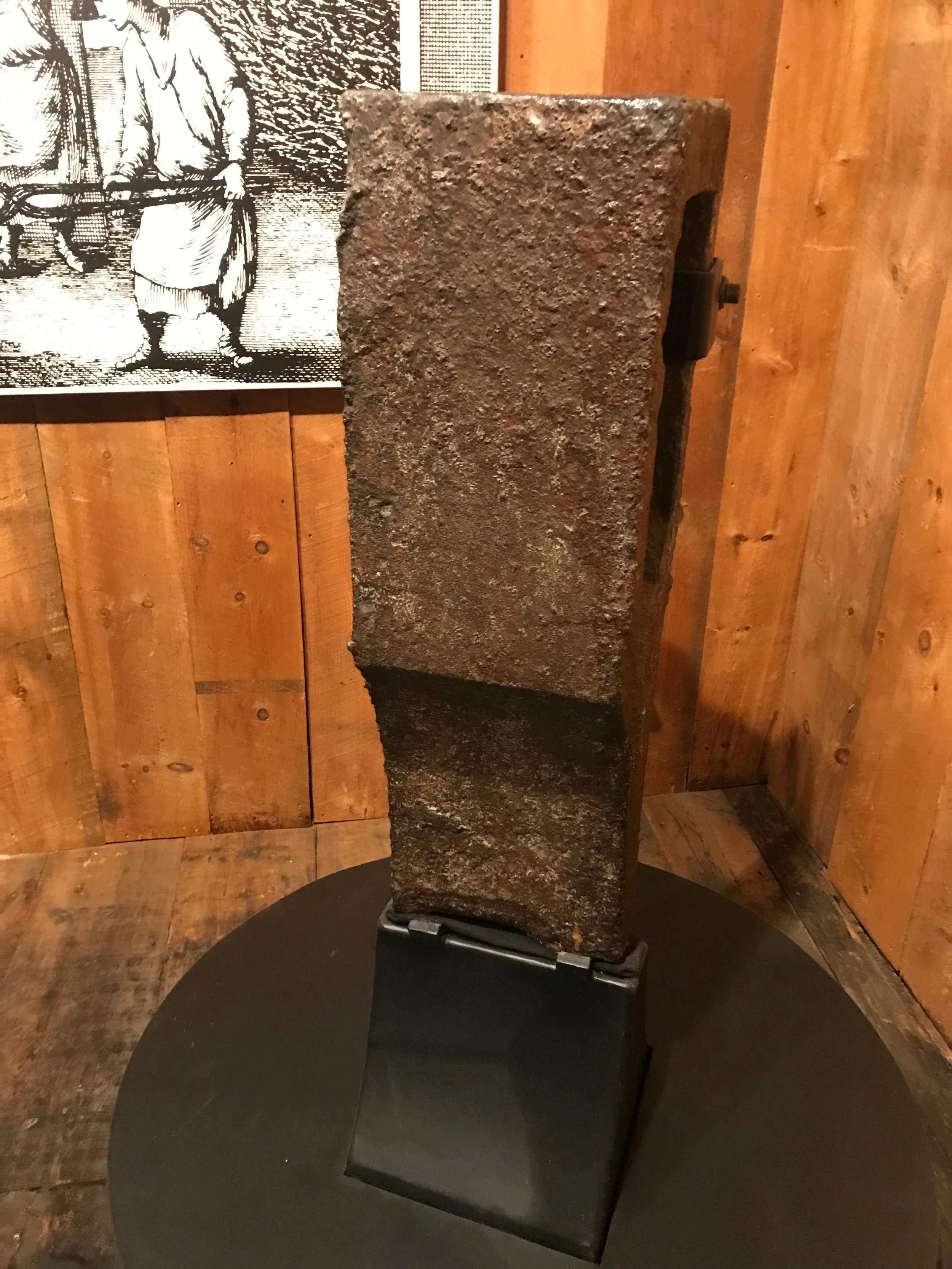
500 pound hammer at the ironworks
There is no documentation of Jonas working for George who turned wood and probably made barrels. Barrel making was a crucial occupation in every colonial town. However, about the time Jonas left for Hammersmith in 1651, George took on James Fales (Vales), as an apprentice. He is documented as having George as his master (DTR, Vol. IV, p. 57 ).
Perhaps a little-known fact about Jonas and the Fairbanks’ contribution to the development of this nation is that Jonas worked in the first successful ironworks in the colonies, called Hammersmith. Now known as Saugus Ironworks, National Park Service Site. It is a complete life size replica of the original ironworks. The forge, the area in which Jonas worked, was built around the location where the 500-550 pound trip-hammer was found during excavation. The ironworks rivaled the top 10 ironworks in the world at that time. (E.N. Hartley)
According to the Ironworks Papers of Hammersmith held at the Baker Library of Harvard Business School, both Robert Crossman and Jonas worked in or about the forge at Hammersmith in 1651 and 1652. Anyone who worked in the forge had to understand all the workings of the forge. It is possible that Jonas was hired primarily to make repairs of the working parts of the forge.
It appears that Robert Crossman preceded Jonas to the ironworks. They were both hired workers who lived at William Osborne’s house, the acting director at that time, about a mile from the ironworks. A third young man, Jonathan Coventry, also boarded there. He was learning skills of a clerk under Mr. Osborne.
There is no documentation of Jonas paying Country Rates in the Dedham Town Records Volume III in 1650, 1651, or 1652. Perhaps, the 1651 and 1652 taxes were paid in Essex County since he worked there those years.
The skilled ironworkers and some bonded workers came from very diverse cultures to this strongly Puritan society. Some didn’t uphold the Puritan way of life. This caused conflict with the local town church in Lynn to an extent that a separate church was erected for the ironworkers at Hammersmith. There are many accounts of ironworkers being called to the Essex County Quarterly Court for their actions. Perhaps Jonas’s association with Hammersmith caused conflict within his family.
It appears Jonas and others at the ironworks were making good wages, particularly the skilled workers. Jonas bought an expensive pair of great boots in 1651. Great boots were boots made of fine leather that could be folded up over the knees when riding and folded down for walking. It became the attire of wealthy men when the royal family commissioned the boots made for young Prince Charles to conceal a brace the prince wore to straighten his deformed leg.
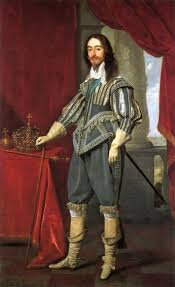
Great Boots
A Sumptuary Law of October 14, 1651 was established to discourage those who didn’t have a worth of a minimum worth of 200 pounds from purchasing or wearing luxury items. This law also helped delineate, publicly, the wealthy from those who were not. Some luxury items were great boots, ribbons, gold/silver lace, and silk hoods.
On November 27, 1652, Jonas was arraigned in Essex County Quarterly Court for wearing great boots before his personal worth was 200 pounds. Several other ironworkers were also called to court in defiance of the Sumptuary Laws. Jonas was acquitted of the charges of wearing the great boots on the basis that he had not seen the broadsheet announcing the Sumptuary Law. Made to Last Forever goes into detail about the ironworks and the Essex County Quarterly Court.
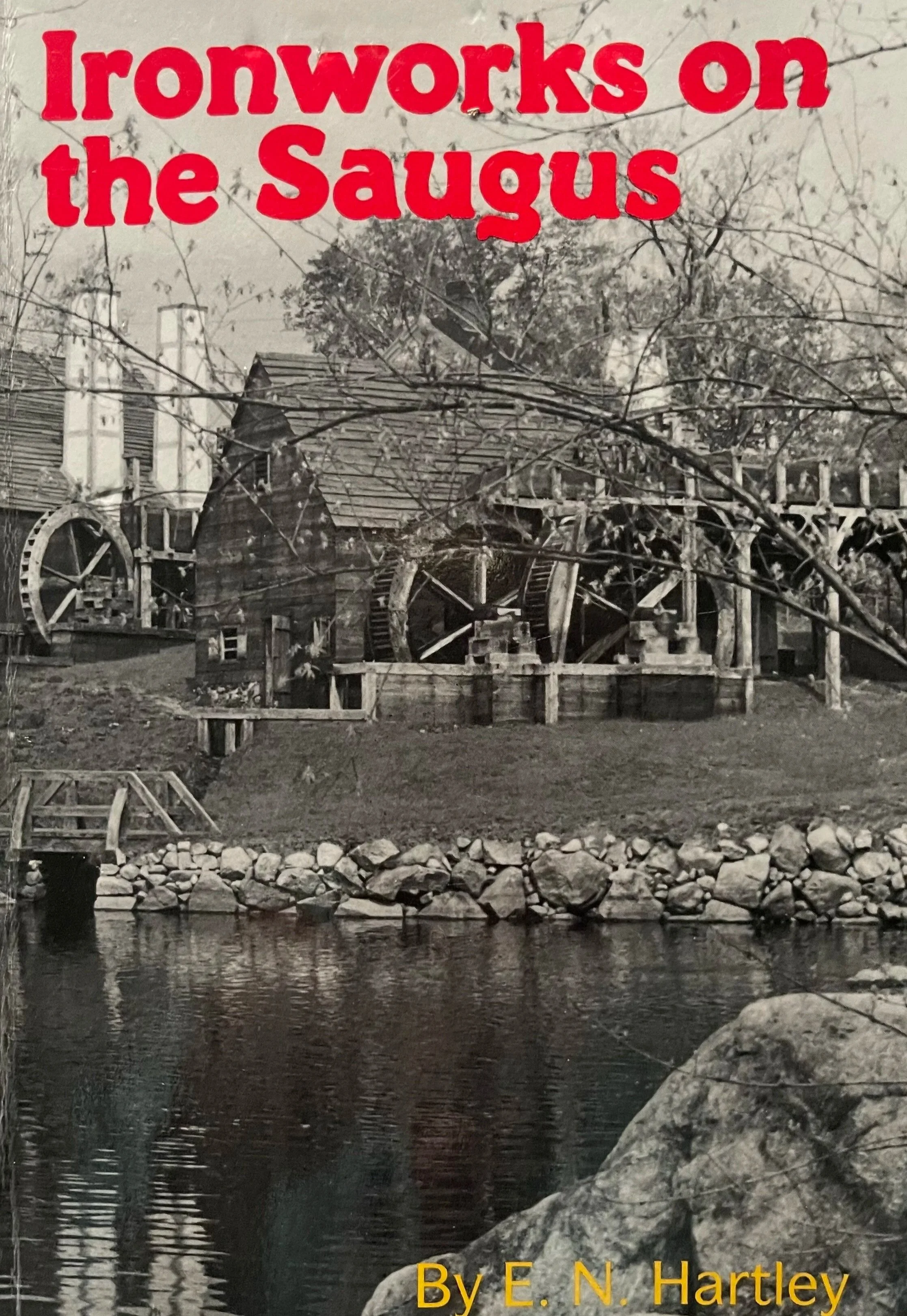
Ironworks on the Saugus by Hartley
By the end of 1652, Hammersmith was experiencing leadership and financial problems. It appears that Jonas and Robert Crossman didn’t return to Hammersmith after December 1652. Instead, the Dedham selectmen asked Crossman to build a water driven mill there (DTR, Vol III, p. 209).
He declined the opportunity DTR Vol. III, page 210 and instead moved to Taunton, Connecticut in 1653/54 to help other former Hammersmith workers develop a new ironworks there.
More detail about the Ironworks can be found in the blog: The Fairbanks Family and the First Successful Ironworks in the Massachusetts Bay Colony: Part I and The Fairbanks Family and Hammersmith Ironworks, Saugus, Massachusetts, 1651-1652: Part II and in the book, Ironworks on the Saugus by E.N. Hartley
Made to Last Forever presents Jonas being sent to Lancaster about 42 miles away from Dedham to help John Prescott to build the town in 1653. The Fairbanks and Prescott families both came from Sowerby, England, thus they probably knew each other before immigrating. Lancaster had only been started as a plantation in 1642 and had a difficult time with its development. Historical accounts cite Jonas as helping to found Lancaster.
Jonas pays Country Rates of 0-5-0 in Dedham in 1653. So, he did some work in Dedham that year. This was 2 pence less than what his younger brother Jonathan Jr. paid that year. John and George paid considerably more (DTR, Vol. III. p. 213).
By 1653, Jonas, 28 years old, was not yet a proprietor of Dedham, nor was he married. He was much older than his brothers when they became proprietors and married. Jonas’s brothers: At the time the brothers married: John was 23 years old, George 25 years old and Jonathan Junior was 21 or 22 years old.
In 1657, both Lancaster and Concord were given rights to develop ironworks despite the monopoly of Hammersmith (Saugus Ironworks). John Prescott after looking for ores in Nashaway (Lancaster) may have encouraged Jonas to come to Lancaster because of his work and knowledge at Hammersmith.
The first meetinghouse was erected in Lancaster in the spring of 1658. The first use of the meetinghouse by the town was a selectman meeting on June 1, 1658. Because other historical accounts indicate that Jonas helped found Lancaster, perhaps he helped build the meetinghouse. Jonas was considered a carpenter. He married Lydia Prescott, fifth daughter of John and Mary (Gawkroger) Prescott on May 28, 1658. It is documented in the Lancaster records that Jonas and Lydia’s marriage was the first official marriage in Lancaster and was performed by Mr. John Tinker. Jonas became a proprietor of Lancaster in 1659.
There is no documentation of how Jonas arranged to marry the youngest daughter of the Prescott family before two older daughters were married. However, the facts about Richard Wheeler as a proprietor of Dedham, living in Medfield, as well as, losing his wife and two children on the same day on December 25, 1656, are documented. The marriage between Richard and Sarah Prescott, one of the older sisters, two months after Jonas and Lydia married, is also documented. Jonas may have influenced the relationship between Richard and Sarah Prescott. The possibility of Jonas and Richard being friends is strengthened by the fact that Jonas, Jonas’s son and Richard Wheeler were all killed at the same time at the same garrison in Lancaster on February 10, 1675/76, at the beginning of the King Philip’s War. John Rugg married Hannah Prescott in 1660, he had been married previously to Martha Prescott. She died with their twin girls in 1655.
In 1664, Jonas and John Prescott were asked about available land near Lancaster. Dedham was looking for 8000-acres to satisfy their grant based on the outcome of the Dedham vs Natick court case discussed in the book and documented in the DTR, Vol IV. The case involving the Indigenous People’s rights to land that was granted to Dedham in 1635 and 1636. Jonas reported to Lieutenant Fisher and John Fairbanks, Jonas’s brother, on behalf of John Prescott that the tract of land was no longer available near Lancaster, MBC (DTR, Vol 4, p. 89).
Jonas lived in Lancaster with Lydia and their seven children until the King Philip’s War when Jonas was killed along with his first son and his brother-in-law Richard Wheeler during an early raid. Lydia signed the petition to the MBC governing body to rescue the town and transport them to the coastal area for safety. Later, Lydia remarried to Ellis Barron Jr., possibly family friends of the Prescotts in England.
Made to Last Forever, depicts a possible conflict between Jonas and his father based on Jonas’s deviation from the life choices of his father and his brothers. In the epilogue of Made to Last Forever, there is some evidence that any conflict, if it existed, was resolved.