Glimpse into Made to Last Forever, Animals and Food, Mary Fairbanks (1622-1684) and Fairbanks Patriots-John Fairbanks
Glimpse into Made To Last Forever: A Family. A House. A Nation.
Animals and food for Fairbanks Settlers of
Massachusetts Bay Colony
When the Fairbanks prepared to voyage across the ocean from England to New England in the early 1600s, they had to be judicious about what they brought with them. If they didn’t bring enough or the right things, they could die the first winter particularly of starvation. Bringing too much was costly or bringing the wrong things might result in wasted space.
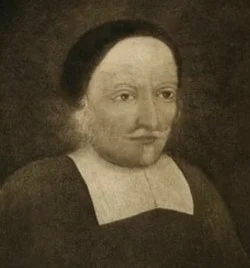
Mr. Francis Higginson minister of England and Early settler in Massachusetts Bay Colony
Ministers, called Mister, in England in the early 1600s were persecuted and forbidden to preach under the new monarch, Charles I. Mr. Francis Higginson left his parish of Leicester because of potential persecution, however, he continued to preach at various pulpits. It is possible the Fairbanks attended one of his sermons at their
St. John the Baptist Church in Halifax parish which was strongly Puritan and far enough from London that it was not scrutinized as carefully.
Reverend Francis Higginson joined John Winthrop Sr., Sir Richard Saltonstall and others in the development and eventual leading of the Massachusetts Bay Company. This company, like others settling new colonies, were initially an act of commerce. When the Puritans received their charter, they not only planned commerce but also a Puritan colony where they could practice their religion away from the Church of England and her bishop leaders.
Mister Higginson, led the first six ships carrying 350 settlers including his own congregation to Salem to begin the Massachusetts Bay Colony in May of 1629. Mr. Higginson died the first year he was in New England leaving a family. However, in the time he was in the New World, he wrote letters back to his home in Leicester. He wrote of the voyage and land and gave a detailed description of what to bring and what to expect. This can be found in New Englands Plantation, or a Short and True Description of the Commodities and Discommodities of that Country.
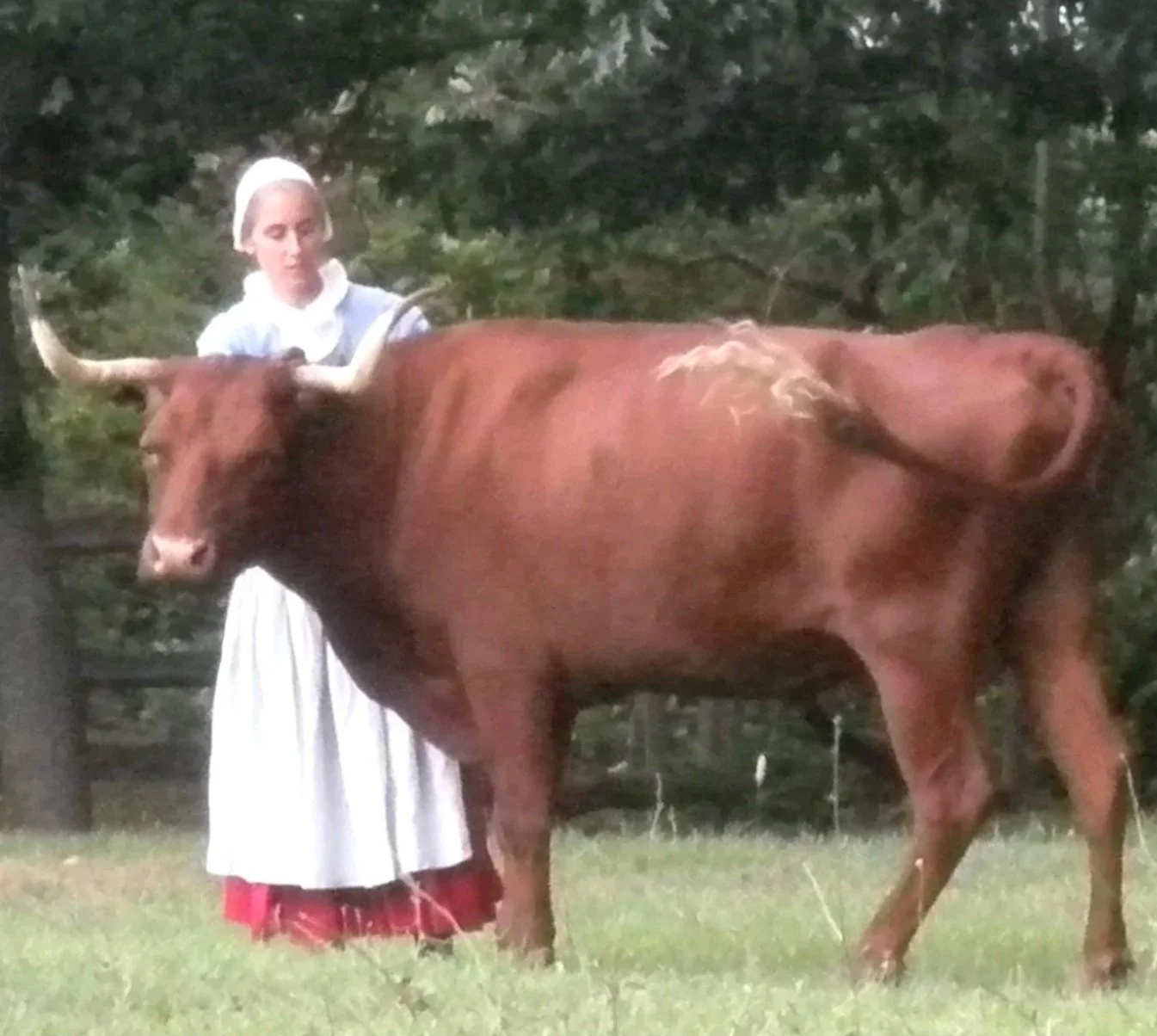
Cow & Maiden Plimoth Plantation
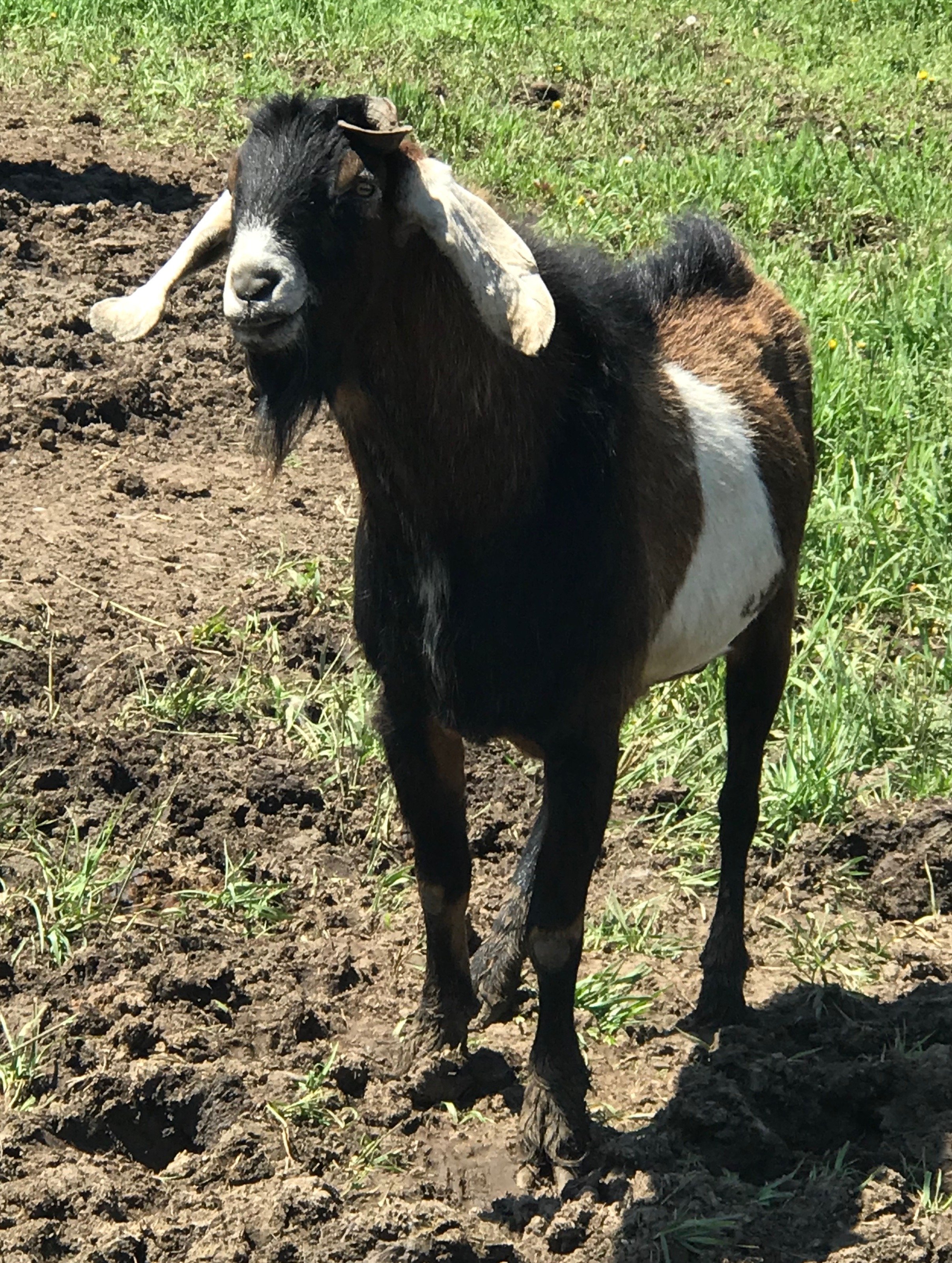
Heritag Goat
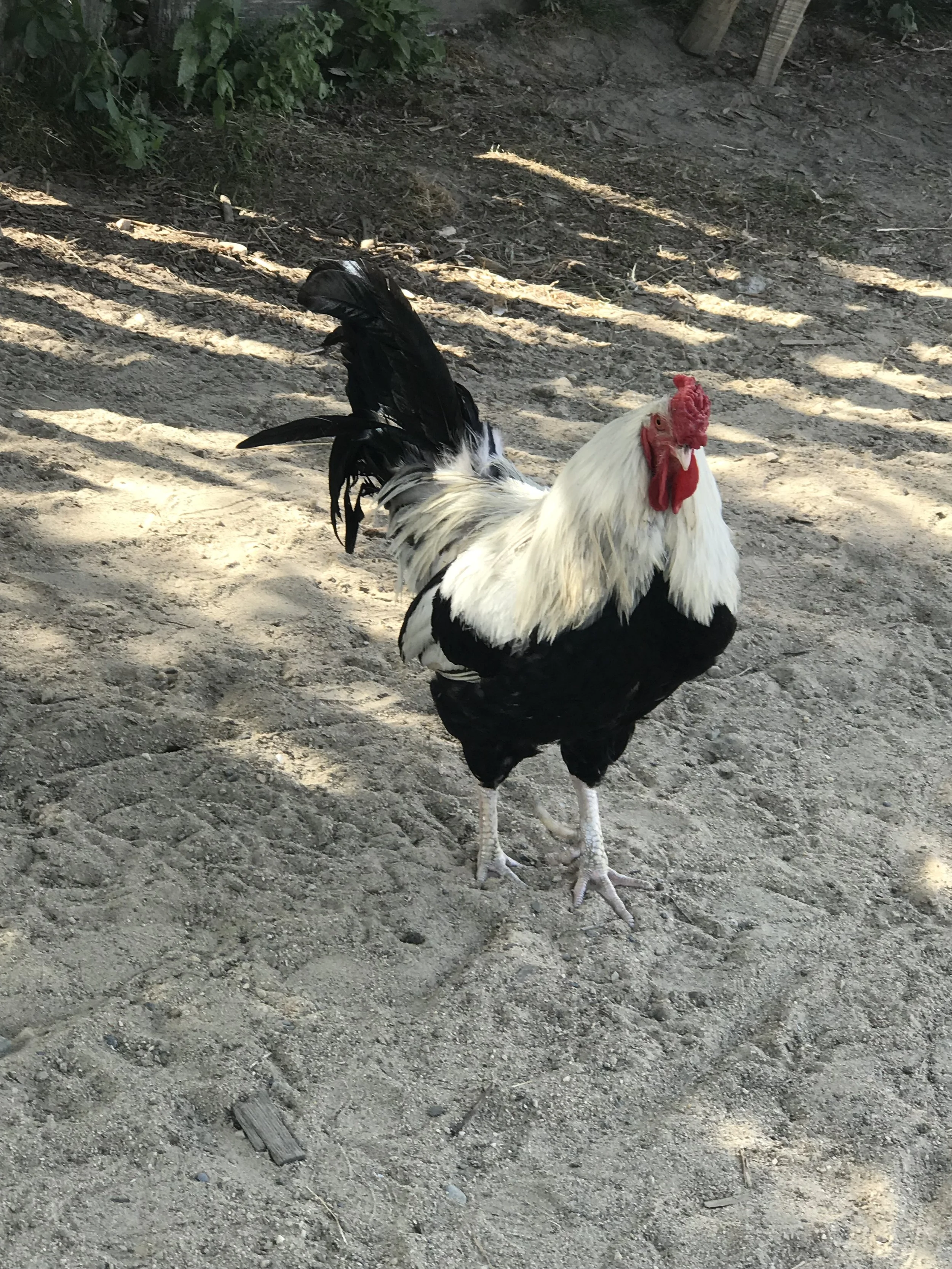
Heritage Chicken
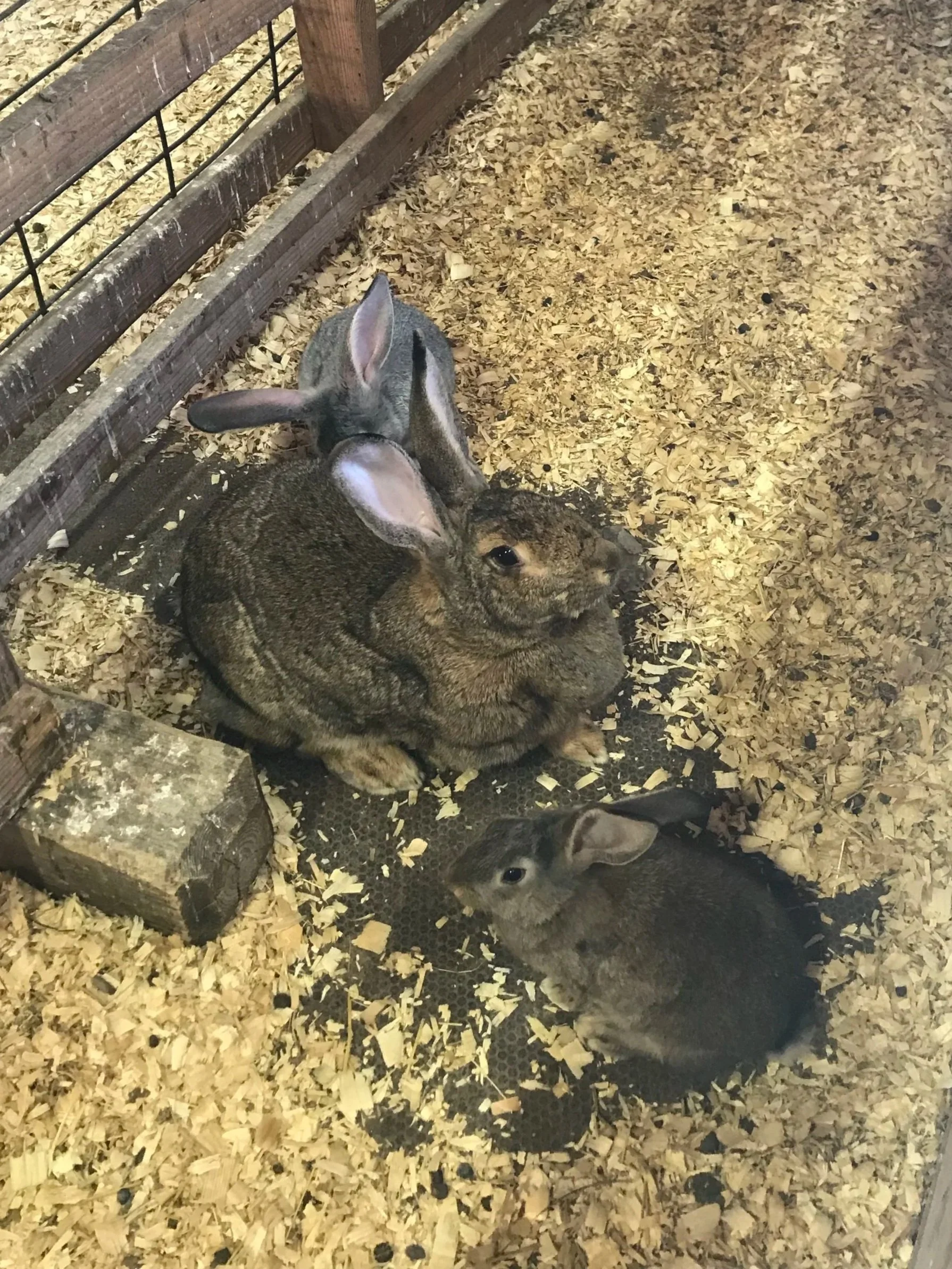
Heritage Rabbits
In his ships, Higginson brought 115 head of cattle, horses and mares, cows and oxen, 41 goats, rabbits, and chickens. Mr. Higginson warned about bringing pregnant animals which posed a risk to the mother and unborn baby. Most animals were young and intended to be raised to produce herds before they were used for food, except milk production. The animals were kept in the lowest level of the ship and were tended and fed by the passengers, not the crew of the ship.
There is no information about Jonathan and Grace’s voyage. The book “Made to Last Forever: A Family. A House. A Nation.” uses the information that Mr. Higginson sent to Leicester, England and other voyage resources to simulate the experience and what they might have brought with them.
If they brought animals, the Fairbanks, like other early settlers, probably didn’t use those animals for meat. They likely hunted for deer, fowl, and fished for protein. However, a mainstay in their diet would have been white meat, particularly in the winter. Ground grains another mainstay, particularly corn, were made into pottage or porridge using the wildlife they hunted.
What is white meat? The cattle they brought were divided into a dry herd and a wet herd. A dry herd would be the cattle that did not produce young and would be used in breeding or as work animals. The “wet” herd were the cows. They were bred and produced calves in the spring. When the calves were weaned, the women milked the cows and made butter and cheeses. Cheeses were their white meat. Cheeses had to be stored for winter use as the cows didn’t produce milk in the winter. As their herds grew, they would slaughter some of their stock and preserve the meat by drying or salting.
It should be noted that Plymouth Plantation, was settled ten years prior to the Massachusetts Bay Colony. They were a source for stock animals in the New World also. However, the first cattle were brought by Ponce de Leon to Florida in 1521 to feed his men. Some became wild. These would be unavailable to the northern settlers for a long time.
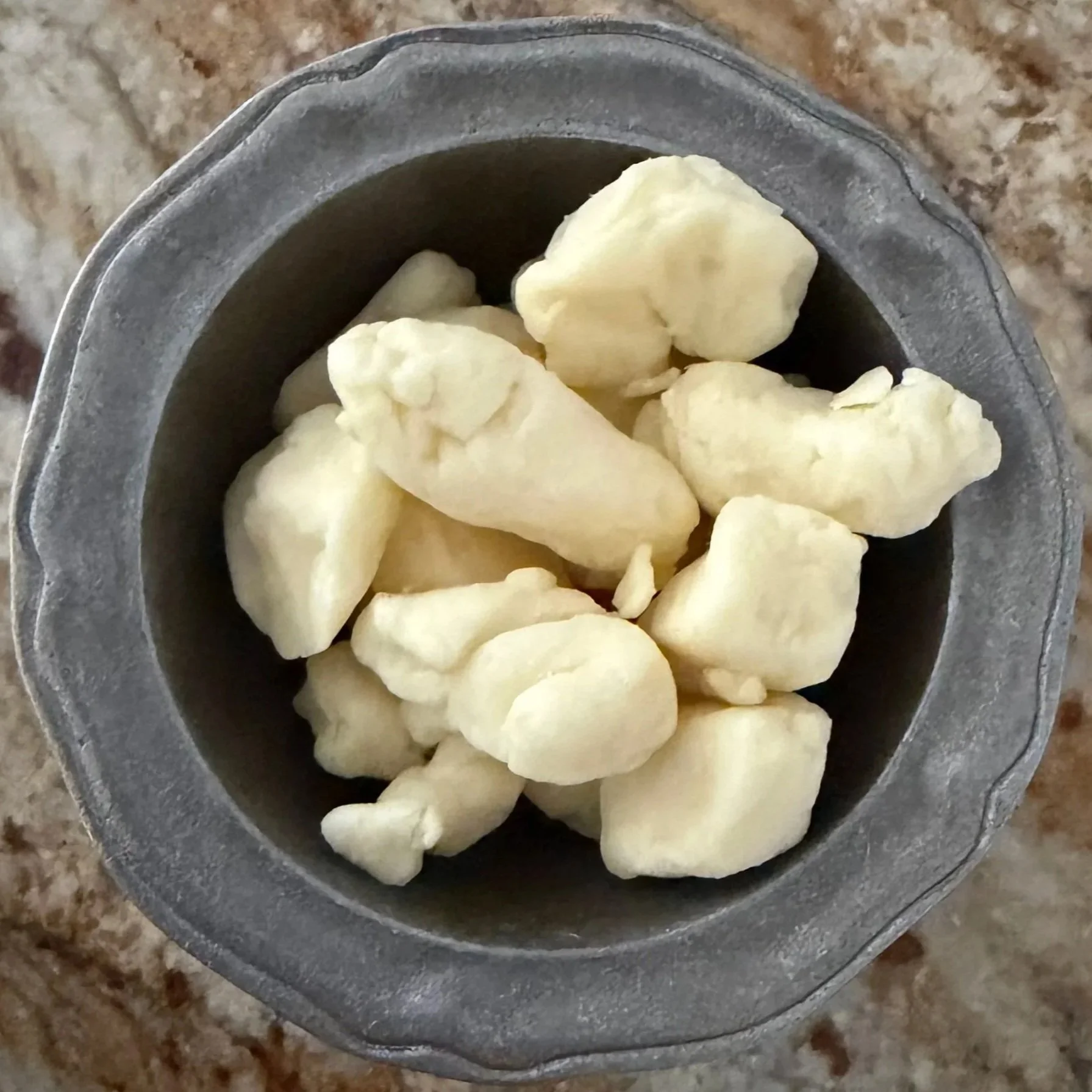
Curd cheese in pewter.
The colonial women were the milkers and dairymaids. There are many examples of historic milk and cheese processing equipment at the Fairbanks House Museum in Dedham. Do you remember the rhyme, Miss Muffet who sat on her tuffet eating her curds and whey? Perhaps Miss Muffet’s tuffet was a grassy hillock or a low seat.
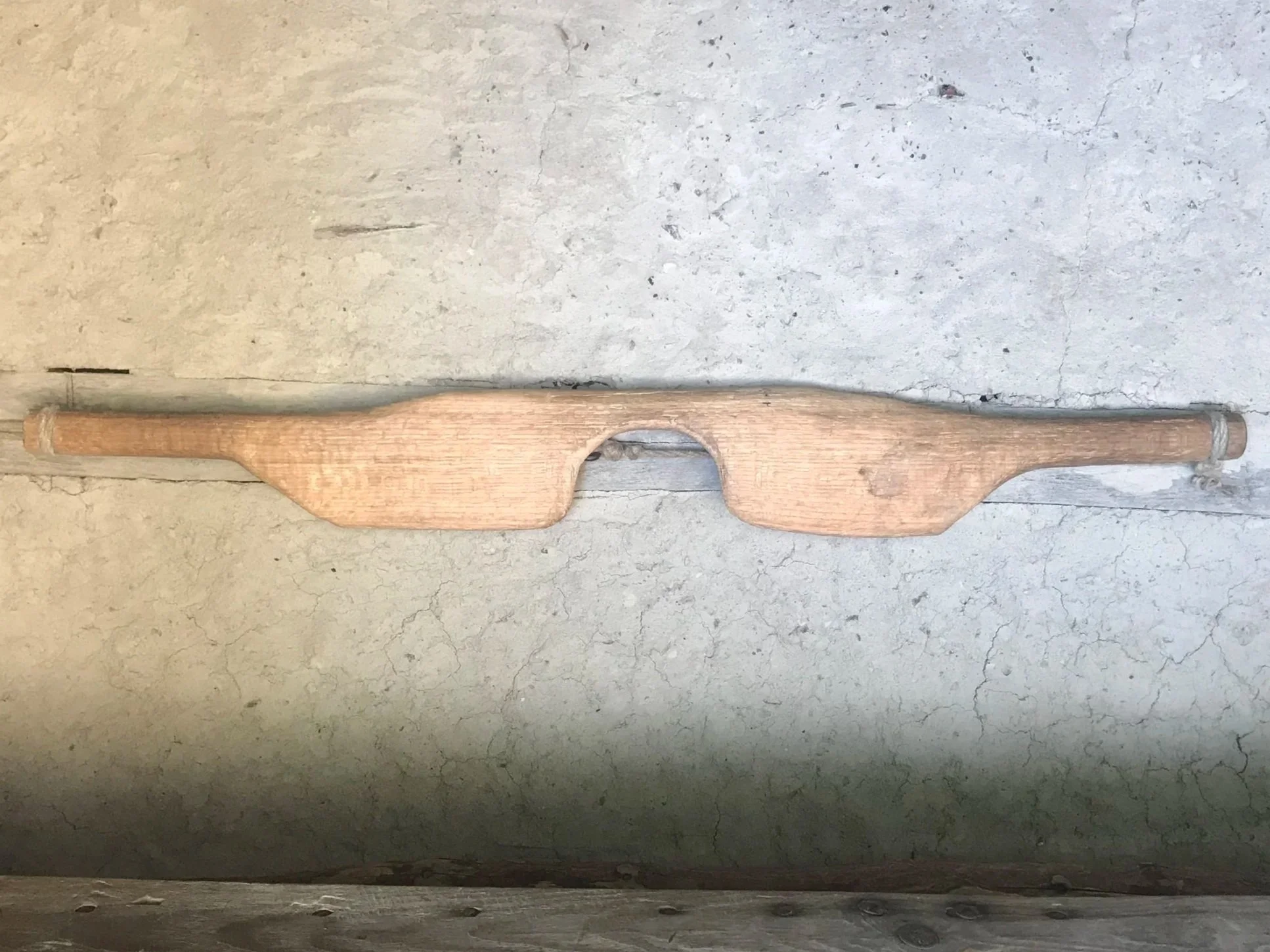
Two bucket shoulder yoke for a woman to carry milk.
In the 1600s, instead of a tuffet, the women used a low three-legged stool called a “cricket” for many seated chores. They made their cheeses using a process which resulted in curds or clumps of fresh cheese which would separate from the whey, the liquid remaining. The fresh cheese was pressed and aged into firm or hard cheese. The liquid that separated from the curds was used in various other cooking. Nothing was wasted in the 1600s.
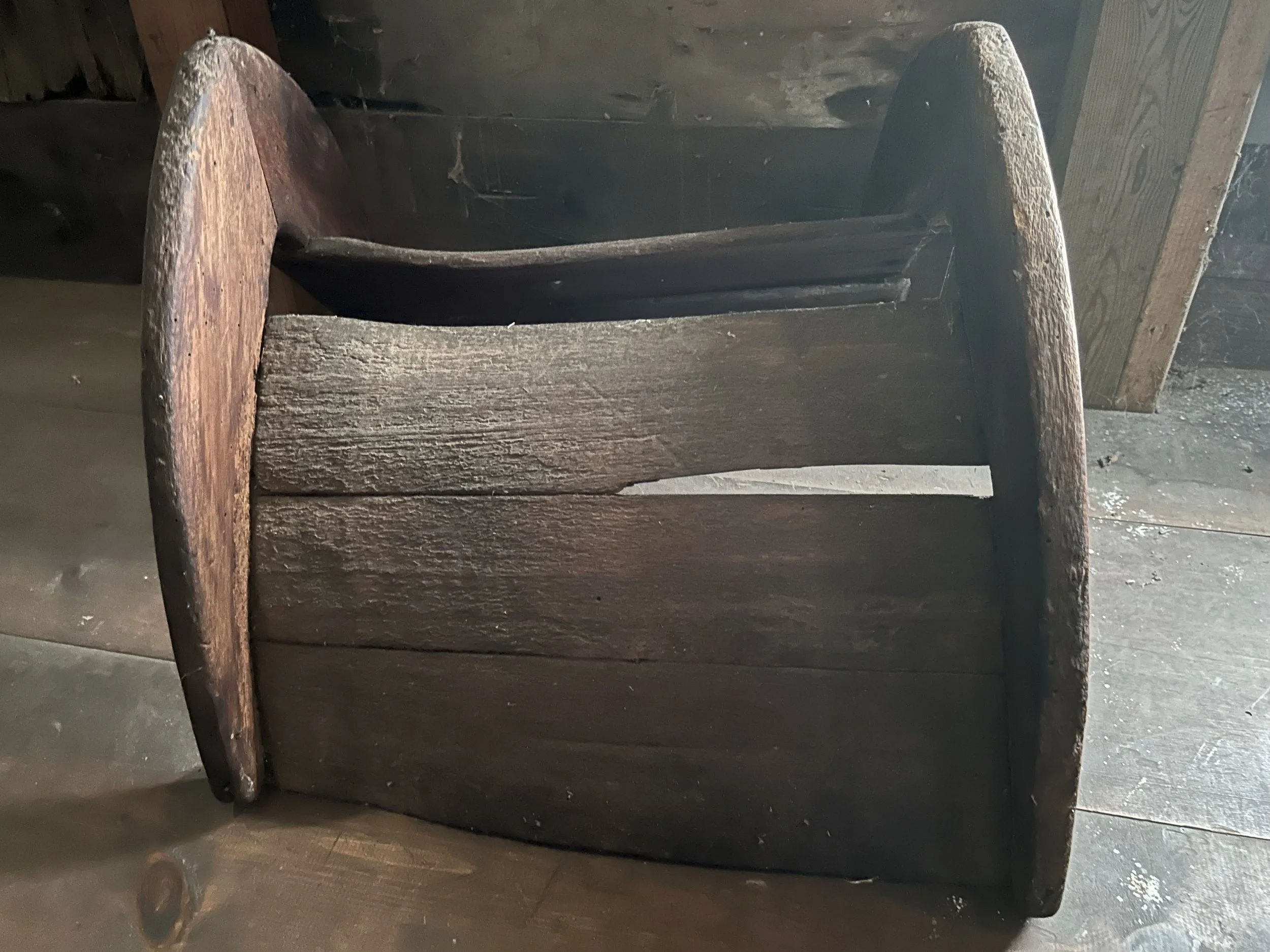
Ox saddle one of the oldest items at the Fairbanks House Museum Dedham, MA.
Later, Jonathan is known to use his oxen for road work for the town of Dedham. An ox saddle and a yoke are among some of the earliest items found at the Fairbanks House Museum. In early Dedham land allotments, Jonathan and his sons were granted land for all the common animals, except sheep..
The settlers of Massachusetts Bay Colony had to make do with what they could bring, conserve what they had, and find ways to survive the early years of settlement. Their animals were an important part of their lives. Each animal had its use and was taken care of well.
Mary Fairbanks (1622-1684)
Jonathan and Grace were married at the St. John the Baptist Church at Halifax, West Yorkshire, England, May 20, 1617 They lived initially in Sowerby where their first child John was born in 1617/18. George the second child was born in late 1619 when the family had moved to Shelf, approximately 6 miles from Sowerby. Their third child Mary was the first daughter born to Jonathan and Grace Fairbanks. She was baptized at the St. John the Baptist church in 1621/22, a little over two years after George. (Joseph, Ruth and James Swan Landberg. “The New England Historical and Genealogical Register 166 (July 2012):165-87.)
In the book, Made to Last Forever: A Family. A House. A Nation., Mary is called, Mary Elizabeth. There are many Marys in the book. Her name was given distiction with the added middle name. There are no facts to support Mary’s middle name was Elizabeth. Mary is also depicted as having an illness in England which is not based on fact, but illnesses were possible, and it didn’t change the outcome of the family.
The next fact known about Mary was that she joined the Church of Dedham in late 1640. The Church of Dedham was gathered in 1638 . She appears to be the first Fairbanks member to join the church. Mary was eighteen years old. Perhaps she was being courted by Michael Metcalf, Jr. (1620-1654). Michael Jr. was about two years older than Mary and joined the church a few months before Mary. They married in February 1643/44. The Metcalf family were early members of the church. Both the Metcalf and Fairbanks families were early settlers of Dedham and likely good friends. In a book published by the New England Historic Genealogical Society, Metcalf Little Book, it is said that Mary Fairbanks and Michael Metcalf Jr. married January 1644 in the Fairbanks House. Weddings were often performed in a home at that time.
Sarah Metcalf, wife of Michael Metcalf Sr., died in November of 1644. After Sarah died, Michael Metcalf Sr. remarried Mary Pidge in 1645. This woman was from Roxbury and had lost her husband due to complications of a falling accident in late 1643. The Pidges had ten children. One source said Mary Pidge tried to get two different uncles to take the youngest child, Martha, who was born in January 1641/42 in Roxbury. The uncles were unwilling to do so. The Metcalfs had 11 children, however many of them were older at the time of the second marriage.
Mary and Michael Jr. had just had their first child when the second marriage of Michael Metcalf Sr. and Mary Pidge took place. Perhaps this is why Jonathan and Grace Fairbanks took Martha Pidge into their home when she was about three years old, instead of Michael Jr. and Mary. There is no documentation of Martha with the Fairbanks family, but descendants of Martha have called her Martha Fairbanks. Martha stayed with Jonathan and Grace until she married Benjamin Bullard in 1659. Together, Benjamin and Martha built a house next to George Fairbanks’s house on the west side of the Charles River known as part of Medfield at the time.
It is difficult to find any documentation about Mary or other women at that time in history, other than marriages, births and deaths. Mary and Michael Jr.’s first child, Michael was born in the 11th month of 1644, about one year after the marriage. They had five children. Their house value in 1648 was about twice as much as John and George, Mary’s brothers.
The last child of Michael Jr. and Mary was born in 1653. Michael Jr. died about a year later in March of 1654. He would have been about 34 years old. The cause of Michael Jr.’s early death is not known. However, in 1653 he was paying school and country taxes which would appear he was still working.
After Michael’s death, Mary had five children 10 years of age and under to care for.
Mary and Christopher Smith were married in 1654, about 11 months after Michael Jr.’s death. Christopher Smith was a proprietor of Dedham since 1640. He was admitted to the church in 1642. Dedham Town Record show various land allotments and transactions. Mary and Christopher had one son, born about a year later in 1655. Christopher died in 1676 in Dedham. Mary died in 1684 in Dedham also. She left a will at the time of her death that was probated on July 3, 1684. Mary would have been 62 years old.
Faribanks Patriots of the Revolutionary War
Contintental Soldiers
John Fairbanks
John Fairbanks is a common name among Fairbanks descendants. The first born child and son of Jonathan and Grace was named John. The name John was used by all of the original children’s downlines. This blog talks about three John Fairbanks who joined the Continental Army during the Revolutionary War. Only one was given an enlistment location and was able to be found in Lorenzo Sayles Fairbanks book, The Fairbanks Family in America: 1633-1897. All of these Johns can be found on pages 858 and 859 of the same book.
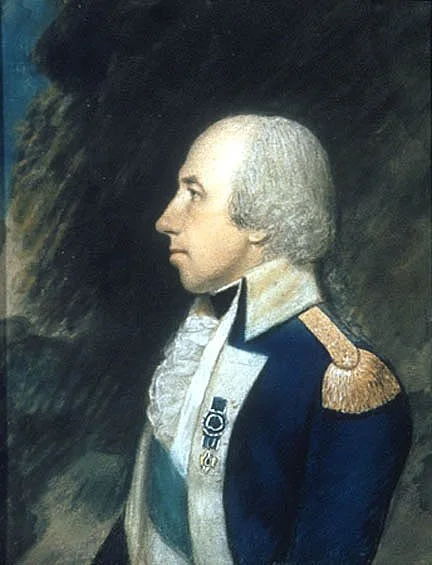
Colonel Rufus Putnam
Likewise only one of the Johns in the Continental Army was found in the National Society of the Daughters of the American Revolution (NSDAR) records.
All three Johns in the Continental Army were listed in service under Colonel Putnam. This may give us a clue to what their chief service was during the Revolutionary War.
Rufus Putnam, the Continental Colonel, for these three men was significant in the Battle of Bunker Hill for his engineering of fortifications around Boston, especially overlooking Boston Harbor. These fortifications were key in the retreat of the British out of Boston during the siege. He was commissioned as Chief of Engineers early by George Washington and continued his work in fortifications. In the Continental Army, Putnam commanded two regiments in the battle of Saratoga which we explored with Elias Fairbanks, the young soldier in the last blog. At the Battle of Saratoga, September 19 and October 7, 1777, at least two of the John Fairbanks were with Putnam. The third doesn’t have his enlistment date noted. The outcome of Sartoga was significant because it brought the French into the war on the Patriot’s side. The French were important in the decisive end of the Revolutionary War.
Putnam continued to work on critical fortifications, including Fort Putnam and at West Point in 1778. In 1779 Putnam continued by commanding the 4th Regiment. One John Fairbanks was with the Colonel most of Putnam’s career. One was noted as enlisting on April 9, 1777 for three years. The other enlisted April 1, 1777 for 35 months.
It appears that the three John Fairbanks in the Continental Army from 1777 until 1780 and 1781 primarily served their country and fellow Patriots in building forifications and defensive structures. However, they probably saw military action also. All three John Fairbankses spent their winters at Valley Forge or Jockey Hollow and other severe winter encampments.
The one John Fairbanks we can account for is John of Sherborn. His number in the Lorenzo Sayles Fairbanks book is #152 on page 190. His lineage is Jonathan I, George II, Jonathan III, Jonathan IV, Abner V.
The NSDAR number for John Fairbanks of Sherborn is #: A038398
John was born May 18, 1760. At the time of the Lexington Alarm Rolls, he had not reached 16 years old, the youngest age to join the war. John enlisted in the Continental Army April 1, 1777 after just turning 17 years old. At that time, his duty was under Captain White and Colonel Rufus Putnam. The NSDAR lists him also under Captain Morse who was also under Colonel Rufus Putnam. John remained in the Continental Army under Colonel Rufus Putnam until December 1, 1780, for a term of 35 months. He was about 23 years old when he was discharged. He move to Union, Maine and taught singing and in the school. Later he moved to Hope, Maine. John married Eunice Payson. They had 9 children. John died in 1830 at age 70 years. Eunice died in 1833.
Like all other contributions to the Revelutionary War, fortifications of major battle points would be crucial to the the success of the war as were the food, clothing, equipment, transportation, housing and all other services provided by the non-fighting men and women of all ages. Alll aspects of settling a new land, raising a family and developing a new nation took coordination of family, community, colony and country efforts. It took many with a common cause to provide the infrastructure, common need fulfillment, protection and support to progress to the next level.